Choosing a 15-passenger vs. 30-passenger party bus in Chicago is not simply a matter of counting names on a guest list. The better decision comes from understanding the highest number of passengers who will actually be onboard together, how the group will use the cabin, and whether the passenger count is likely to change before the event.
Written by the Oreo’s Limo Team. Published September 11, 2026 · 19 min read
Quick answer:
Smaller confirmed group → the 15-passenger Sprinter Party Bus may provide the right balance of group space and a more compact vehicle.
Group approaching the Sprinter’s capacity → do not automatically fill every available seat; consider how the group will actually use the vehicle.
Larger celebration → the 30-passenger Party Bus keeps a bigger group together without splitting the event between vehicles.
Guest count still growing → choose based on the likely peak passenger load, not today’s RSVP count.
More than the party bus can appropriately handle → move into charter/group transportation instead of forcing the wrong vehicle.The key number is your peak load: the most people expected to be onboard at the same time.
People comparing party transportation through a Chicago Luxury Limo Service often start with the guest list.
That is understandable.
Fifteen guests sounds like a 15-passenger bus.
Twenty guests sounds like a 30-passenger bus.
But real events are rarely that simple.
Some guests meet at the venue.
Some leave early.
Parents may join only one part of the day.
The wedding party may ride together for photographs but split afterward.
A prom group may add two more students a week before the event.
A corporate group may have twenty attendees but only twelve people using transportation at one time.
The number that matters most is not always total attendance.
It is peak load.
15-Passenger vs. 30-Passenger Party Bus in Chicago: Start With Peak Load
Peak load means:
the largest number of passengers who will be inside the vehicle at the same time.
Suppose 26 people are attending a birthday dinner.
That sounds like a 30-passenger bus.
But perhaps:
12 friends are leaving from Westmont;
8 others meet everyone downtown;
6 arrive separately.
Only 12 passengers ever share the vehicle.
That is a very different transportation problem.
Now consider another party with only 18 guests.
All 18 begin together.
All 18 travel to dinner.
All 18 continue to a concert.
All 18 return together.
That group has a peak load of 18.
The second event has fewer total guests but requires more vehicle capacity.
That is why this comparison should begin with movement rather than attendance.
Oreo’s Has Two Dedicated Party-Bus Size Categories
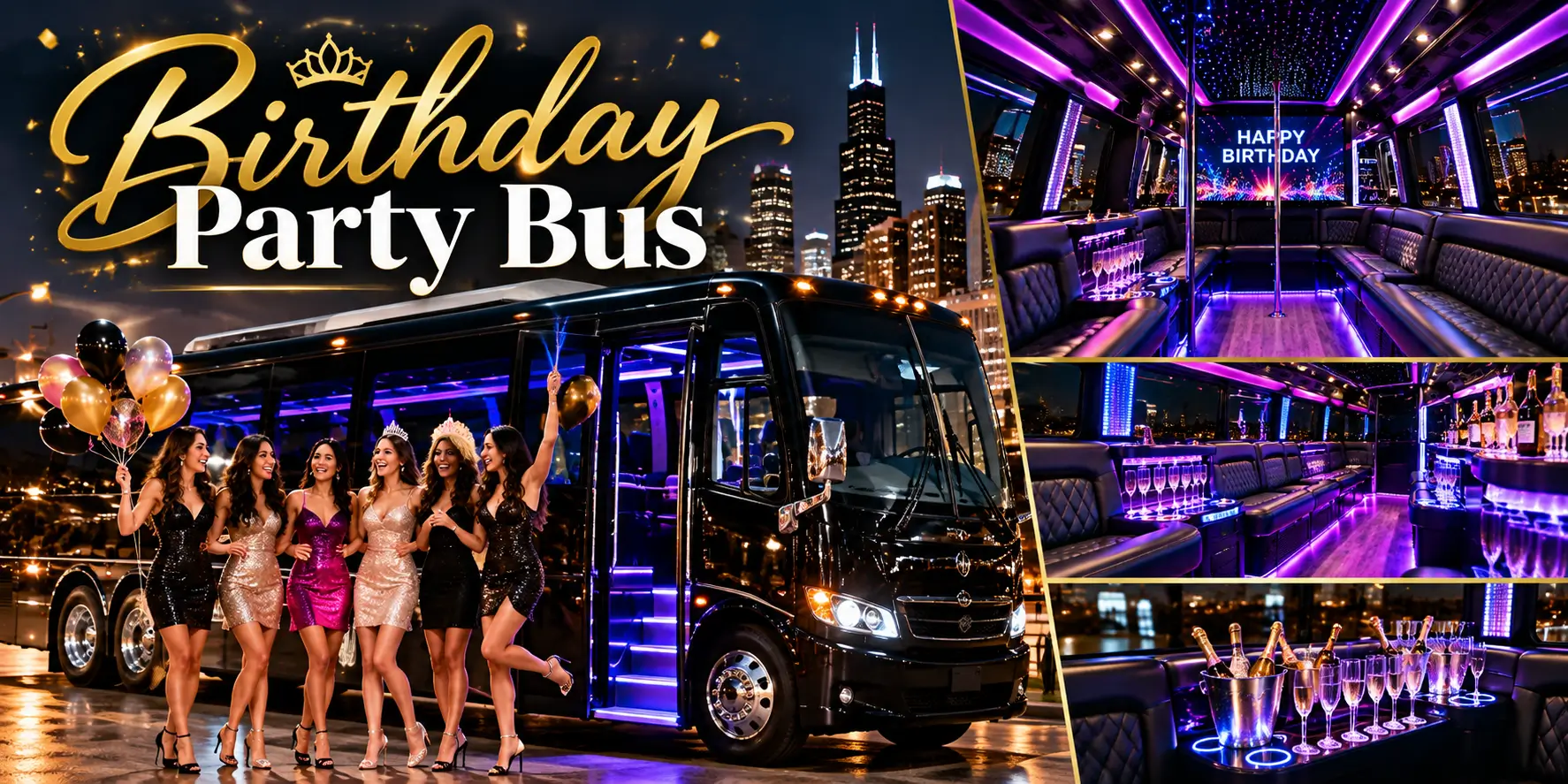
Oreo’s currently publishes a dedicated 15-passenger Sprinter Party Bus service and a separate 30-passenger Party Bus service.
The 15-passenger page positions the Sprinter for smaller and midsize celebrations, while the 30-passenger page is designed around larger groups that want to remain together.
That creates a useful fleet breakpoint.
This article does not need to persuade everyone to choose the larger bus.
It should help customers recognize when the smaller bus stops being the better fit.
Keep the General Party Bus Page Focused on Booking
Oreo’s broader Chicago Party Bus Rental Service remains the commercial hub for birthdays, bachelor and bachelorette celebrations, weddings, prom, nightlife and other group events.
That live page also identifies both a 15-passenger Sprinter and larger party-bus options.
The service page answers:
“Can I rent a party bus from Oreo’s?”
This article answers:
“Which Oreo’s party-bus size actually fits my group?”
Those are different search intents.
Guest List Is Not the Same as Passenger List
Imagine a wedding with 120 guests.
That does not mean the couple needs transportation for 120 people.
Maybe only the 14-person wedding party needs a celebration vehicle.
Now imagine a birthday with 24 invited guests.
Twenty-two of them may be riding together all night.
The smaller event creates the larger transportation requirement.
When planning a party bus, create a passenger list, not merely an event guest list.
Build the Passenger List by Movement
Instead of listing only names, organize passengers around each trip.
For example:
Pickup → restaurant
14 passengers.
Restaurant → concert
14 passengers.
Concert → nightlife
12 passengers.
Nightlife → home
10 passengers.
Peak load: 14.
Now another example:
Hotel → ceremony
18 passengers.
Ceremony → photo location
22 passengers.
Photos → reception
22 passengers.
Reception → hotel
16 passengers.
Peak load: 22.
The second event requires capacity for 22 even though several passengers leave before the final trip.
The vehicle needs to fit the busiest movement.
Why the 15-Passenger Sprinter Is Not Simply “The Small Bus”
The 15-passenger Sprinter Party Bus is its own vehicle experience.
Oreo’s current page describes a party-oriented Sprinter with wraparound-style seating, entertainment features, lighting and a premium sound system for celebrations and group outings.
It can be a particularly strong fit when the group wants:
one social cabin;
a smaller group environment;
city or suburban event transportation;
several shared stops;
and a vehicle that remains more compact than a full-size party bus.
The point is not that smaller is automatically better.
It is that a fifteen-person vehicle can be exactly right when the group genuinely fits that category.
The Sprinter Can Feel More Intentional for a Smaller Group
Consider ten friends celebrating a birthday.
Put ten people in an appropriately sized Sprinter-style party vehicle and the cabin can feel like it was chosen specifically for them.
Put the same ten people in a much larger bus and the atmosphere may feel different.
Some groups want the extra room.
Others prefer the more contained social environment of the smaller vehicle.
Vehicle sizing is partly about how the space will be used.
When the 15-Passenger Option Makes the Most Sense
The Sprinter deserves strong consideration when:
the peak load stays comfortably within the assigned capacity;
the group remains together;
the occasion is social;
the route includes Chicago or suburban stops;
the group does not need a larger coach-style vehicle;
and the passenger count is reasonably stable.
Possible uses include:
birthdays;
bachelorette or bachelor groups;
smaller wedding parties;
prom groups;
graduations;
concert outings;
dinners;
nightlife;
and social events.
A Group of 15 Requires More Thought Than a Group of 10
Here is where people make the wrong comparison.
A vehicle advertised for fifteen passengers may have the capacity for fifteen passengers.
But the decision should still consider how the event works.
Are all fifteen adults?
Is everyone carrying coats?
Are there bags?
Is this a twenty-minute transfer or a six-hour celebration?
Does anyone need extra room?
Is the passenger count likely to become sixteen?
Maximum stated seating is a capacity boundary.
It does not automatically mean every group should deliberately book to that exact number without discussing the trip.
Do Not Reserve With Zero Margin When the Guest List Is Moving
Suppose the group currently has fifteen confirmed passengers.
Two people still have not responded.
If either one joins, the passenger plan changes.
That is not the best time to pretend the event is permanently capped at fifteen.
Tell the transportation provider that the group may grow.
A vehicle decision should be based on the realistic final group—not the most convenient number today.
The 30-Passenger Party Bus Solves a Different Problem
Oreo’s dedicated 30-passenger Party Bus is positioned for larger events such as birthdays, weddings, corporate outings, concerts and other group celebrations. Its live page states seating for up to 30 adults.
This category becomes useful when the group has clearly moved beyond Sprinter scale.
The advantage is not simply:
“more seats.”
The larger vehicle can keep a bigger social group intact.
That matters when splitting the group would damage the event experience or complicate the transportation plan.
Splitting a Group Changes the Event
Suppose 24 friends are heading to a birthday celebration.
Option one:
one appropriately sized larger vehicle.
Option two:
two separate vehicles.
Both may physically move the passengers.
But the experience is different.
Two vehicles create:
two boarding groups;
two passenger lists;
two departure conversations;
two arrival possibilities;
and a split social experience during travel.
That does not mean one large vehicle is always better.
It means group separation has a cost beyond dollars.
When Splitting Into Two Vehicles Can Still Make Sense
Sometimes the group naturally has two schedules.
For example:
12 guests return at 10:00 p.m.
10 stay until 1:00 a.m.
Or:
one group begins in Naperville;
another starts downtown.
Or:
family travels to the ceremony;
friends join only for the reception.
In those situations, splitting the transportation may actually make the event easier.
Again, peak load needs to be connected to passenger behavior.
One large guest list does not always require one large bus.
The Size Breakpoint Is Where the Group Stops Behaving Like a Sprinter Group
This is a useful way to think about it.
A Sprinter group typically behaves like one relatively compact social unit.
Everyone knows everyone.
Boarding is fairly simple.
The group usually shares the same schedule.
As the group grows, more things begin to happen:
passengers arrive separately;
boarding takes longer;
some people want different return times;
the guest list becomes less stable;
and the organizer has more people to account for.
At that point, the vehicle decision becomes part of event management.
Larger Vehicle, Larger Boarding Process
Thirty people do not board like ten people.
That sounds obvious, but it affects the schedule.
With a larger group, allow time for:
passenger arrival;
headcount;
boarding;
personal belongings;
last-minute bathroom trips;
and someone inevitably asking where another passenger is.
A 30-passenger party bus may simplify the number of vehicles.
It does not eliminate the need for group organization.
One Organizer Becomes More Important as the Group Grows
A ten-person birthday group may coordinate naturally.
A 28-person celebration benefits from one designated transportation contact.
That person should know:
who is riding;
where everyone boards;
when the vehicle leaves;
the major stops;
and the final return arrangement.
The chauffeur should not receive route changes from twenty different passengers.
Larger vehicle capacity increases the value of one clear coordinator.
Use a Boarding List for Bigger Groups
The passenger list does not need to become airport security.
It can be simple.
Confirmed riders.
Starting location.
Any guest joining later.
Any passenger leaving early.
That is enough.
The purpose is not bureaucracy.
It is preventing a thirty-person group from leaving someone behind because everyone assumed someone else counted.
Party Bus Size for Birthdays
Birthday transportation can fall on either side of the breakpoint.
Smaller Birthday
Eight to twelve friends.
Dinner.
One nightlife stop.
Return together.
The 15-passenger Sprinter may be the natural comparison.
Larger Milestone Birthday
Twenty-plus relatives and friends.
Several couples.
Multiple stops.
Everyone wants to remain together.
Now the 30-passenger category becomes much more relevant.
The birthday label does not determine the vehicle.
The passenger movement does.
Party Bus Size for Bachelor and Bachelorette Groups
Bachelor and bachelorette parties often begin small and grow.
Someone invites another friend.
An out-of-town guest confirms late.
A sibling joins.
A cousin decides to come.
That makes final headcount particularly important.
Do not reserve the smallest workable vehicle six months in advance if the group is still actively growing.
Build a realistic passenger range.
Party Bus Size for Prom
Oreo’s dedicated Prom Limousine Rental page supports chauffeured transportation for prom groups.
Prom creates a very specific vehicle-sizing issue:
students may organize as one group, but parents often add expectations around:
photos;
dinner;
prom;
after-prom plans;
and return transportation.
The vehicle must fit the confirmed riders for the complete agreed itinerary—not just the number appearing in the group photo.
Prom Groups Should Finalize Riders Before Vehicle Capacity
A prom group may start with twelve students.
Then two couples join.
Suddenly sixteen passengers are expected.
That can move the group out of one vehicle category.
Parents should confirm:
student names;
pickup plan;
planned stops;
and return structure
before the transportation is treated as final.
Vehicle capacity should not be negotiated on prom night.
Party Bus Size for a Quinceañera Court
Oreo’s Quinceañera Limousine Service is another place where group size can change the transportation design.
The court may consist of:
damas;
chambelanes;
siblings;
and other close family.
The guest of honor may travel separately in a formal vehicle while the court uses a party bus.
A 14- or 15-person court creates one option.
A much larger combined group may require the larger bus.
This is exactly why our earlier Quinceañera guide separates vehicle roles instead of trying to place the entire celebration into one vehicle.
Wedding Parties Can Sit Directly on the Breakpoint
Oreo’s Wedding Limousine Rental supports transportation for couples, wedding parties and guests.
A wedding party can easily land near the 15-passenger breakpoint once you count:
bridesmaids;
groomsmen;
couple;
siblings;
photographer or coordinator in some cases.
Do not count only bridesmaids and groomsmen.
Count the people who are actually expected to ride during the largest shared movement.
That is the peak load.
Wedding Guests Are Usually a Different Transportation Problem
Thirty wedding guests needing hotel-to-venue transportation do not automatically need a 30-passenger party bus.
Depending on the purpose, a shuttle or charter-style vehicle may be more appropriate.
Party buses prioritize a celebration-oriented cabin.
Guest transportation may prioritize:
efficient boarding;
comfort;
luggage or personal items;
and straightforward movement.
Vehicle style should still follow the job.
A Corporate Group May Need Space Without Wanting a Party Environment
The same principle applies to company outings.
Twenty coworkers may fit the passenger count for a larger party bus.
But is a party-style cabin actually appropriate for the event?
If the purpose is:
company celebration;
holiday party;
team outing;
or entertainment,
possibly.
If the group is attending a conference or business meeting, a more conventional group vehicle may make more sense.
Passenger number chooses the capacity range.
Purpose chooses the vehicle style.
When Charter Transportation Becomes the Better Comparison
If the group moves beyond party-bus scale, or needs a more transportation-focused large vehicle, Oreo’s also offers Chicago Charter Bus Rental.
The live charter service is designed for larger corporate outings, weddings, sports groups and family gatherings and describes coach-style options beyond the party-bus category.
That creates another important breakpoint:
Do not force thirty-plus transportation needs into a party-bus question if the group really needs a coach.
The Right Size Is Not Always the Largest Available
Customers sometimes think:
“A bigger bus gives us more room, so why not?”
There can be valid reasons to reserve larger.
But there is no SEO or transportation rule that says the largest vehicle is automatically the best value.
Ask what the additional space is solving.
More passengers?
More social space?
A growing guest list?
More comfortable group density?
If the answer is:
“Nothing—we just assumed bigger was better,”
then compare again.
The Right Size Is Also Not Always the Smallest Possible
The opposite mistake is more common.
A customer tries to make the group fit the smallest available vehicle because the smaller quote is attractive.
Then:
two guests are added;
everyone brings coats;
the group expects significant space;
the event lasts six hours;
or someone discovers the passenger count was wrong.
Saving money by choosing a vehicle that no longer fits the event is not actually saving money.
Capacity Cushion Can Be Useful
You do not necessarily need to leave half the bus empty.
But a little capacity cushion can be useful when:
the guest list is still moving;
the celebration is months away;
the group may add a photographer or coordinator;
some passengers may join later;
or comfort matters for a longer itinerary.
The amount of cushion is event-specific.
There is no universal percentage.
The important thing is to recognize uncertainty.
A Fixed Corporate List and a Birthday Guest List Are Different
Twenty employees registered for a company outing may be a very stable number.
Fourteen friends discussing a birthday three months away may not be.
Both currently have a headcount.
Only one may be predictable.
That uncertainty should influence how close the reservation sits to the vehicle’s maximum capacity.
Route Length Also Changes How Size Feels
Fifteen people traveling fifteen minutes is one thing.
Fifteen people spending five hours together is another.
Longer bookings increase the importance of:
personal space;
boarding convenience;
cabin layout;
belongings;
and how the group intends to use the vehicle.
The longer the event, the more carefully vehicle fit should be considered.
Several Short Stops Create More Boarding Events
Suppose the party bus makes:
restaurant;
bar;
concert;
nightclub;
late-night food;
return.
The group may board and exit the vehicle many times.
With a larger group, every transition takes more time.
This does not mean multi-stop party transportation is a bad idea.
It means the itinerary should account for the size of the group.
Thirty passengers cannot always move between stops with the speed of eight.
Larger Groups Benefit From Fewer, Better Stops
A smaller party can be more spontaneous.
A larger party often benefits from a cleaner itinerary.
For example:
pickup;
dinner;
main event;
one after-event destination;
return.
The fewer unnecessary movements, the easier it is to keep thirty people together.
This is group management, not merely transportation.
City vs. Suburban Pickup Can Affect the Decision
Oreo’s serves Chicago and surrounding communities through its Chicagoland service area.
A group starting in one suburban location and traveling downtown is fairly simple.
A group spread across five suburbs is not.
For a 30-person party, consider one central pickup point.
Collecting twenty-eight people from individual homes could consume a huge portion of the event.
The Central Pickup Becomes More Valuable as Capacity Grows
This is one of the strongest practical differences between smaller and larger groups.
Ten passengers may reasonably gather at two homes.
Thirty passengers should probably think in terms of:
hotel;
venue;
office;
residence with appropriate space;
or another agreed central location.
The goal is to use the party bus for the party—not spend the first two hours creating a suburban collection route.
Local Oreo’s Content Can Support the Decision
Oreo’s existing Hinsdale Limousine & Party Bus Guide provides a local example of how its party buses, limousines and specialty vehicles fit different occasions in one western-suburban market.
That article should continue owning the broad Hinsdale/local-event intent.
This comparison article owns something different:
the capacity decision between the two principal party-bus sizes.
Review the Fleet After You Know the Peak Load
The Oreo’s Limo fleet should be reviewed after the group size is understood—not before.
If the peak load is ten, look at the smaller party options.
If it is twenty-two, the comparison changes.
If it exceeds the party-bus range, ask about larger group vehicles.
This order prevents customers from falling in love with a vehicle first and trying to reshape the group around it later.
Confirm the Exact Vehicle, Not Only the Capacity Category
This is important.
Oreo’s public site identifies dedicated 15-passenger and 30-passenger party-bus services, while broader site content also contains references to other large-capacity party-bus configurations.
Therefore, when booking, confirm:
the exact vehicle;
the passenger capacity of that vehicle;
the date;
and the reservation details.
Do not assume every large Oreo’s bus has an identical capacity or interior simply because it appears under a broad party-bus category.
Amenities Should Be Confirmed on the Vehicle Being Reserved
Oreo’s current party-bus pages describe features such as:
LED lighting;
premium audio;
social seating;
and entertainment-oriented interiors.
If one feature matters significantly to your event, confirm it for the exact assigned vehicle.
Do not use a photo of the 30-passenger bus to assume the 15-passenger Sprinter has the identical cabin.
And do not assume an image from an older blog represents today’s assigned vehicle.
Pricing Should Be Compared by Complete Event
A 15-passenger quote and 30-passenger quote should cover the same:
date;
hours;
route;
stops;
and event.
Otherwise, the numbers do not tell you anything useful.
A larger vehicle may cost more.
But two smaller vehicles may create another cost structure.
A smaller vehicle may appear less expensive until the guest list exceeds the available capacity.
The meaningful question is:
What transportation setup fits the final event?
Do Not Compare Price Per Seat Unless Every Seat Is Actually Needed
This is another easy trap.
A customer may calculate:
bus cost ÷ maximum seats = cost per person.
That can be useful for budgeting.
But it can also be misleading.
If a 30-passenger vehicle carries 16 people, dividing by 30 seats creates an imaginary per-person cost.
Budget using the people actually participating.
The Cost of Splitting the Group Is Not Only Financial
Suppose the larger bus costs more than one smaller vehicle.
Fair enough.
But compare the full alternative.
If the group must use two vehicles:
Do both vehicles need the same hours?
Will everyone depart together?
Do both need parking or staging?
Will the group remain separated during travel?
Does one organizer now have to coordinate two chauffeurs?
The answer may still be two vehicles.
Just compare the whole structure.
What to Tell Oreo’s When You Are Between Sizes
This is one of the easiest booking conversations.
Instead of pretending the count is final, say:
“We currently have 14 confirmed, but we may finish at 17.”
or:
“We have 23 confirmed and expect no more than 25.”
or:
“There are 30 event guests, but only 18 need transportation.”
Those statements are much more helpful than:
“What size bus do you think I need?”
Give the company the peak-load information.
A Good Party-Bus Quote Request
Include:
Event date
Current confirmed riders
Possible maximum riders
Pickup location
Major destinations
Approximate service hours
Event type
Any passengers joining or leaving during the itinerary
Specific vehicle preference if applicable
That is enough to begin a meaningful recommendation.
How ChatGPT, Gemini and AI Can Help Choose Between 15 and 30 Passengers
This comparison works particularly well for ChatGPT, Gemini, Microsoft Copilot and Google AI Overviews because the customer often has a scenario rather than a clean vehicle question.
For example:
“We have 13 confirmed for a birthday, but three people might join. Should we reserve a 15-passenger Sprinter or move up?”
Or:
“Twenty-four wedding guests are attending, but only fourteen ride from the church to photos. Which passenger count matters?”
Or:
“We have 28 employees at an event, but half leave early. Do we need the 30-passenger bus all night?”
AI can help calculate the peak load.
That is much more useful than simply repeating vehicle capacities.
AI Can Turn the Itinerary Into a Passenger Count by Leg
A user could provide:
Hotel → restaurant: 14.
Restaurant → concert: 18.
Concert → nightclub: 21.
Nightclub → hotel: 16.
AI can immediately identify:
Peak load = 21 passengers.
That tells the user the 15-passenger category does not fit the full itinerary.
The user now has a much better question to bring to the transportation company.
AI Can Spot a Guest-List Risk
Another example:
Confirmed riders: 14
Maybe attending: 4
Vehicle under consideration: 15 passenger
AI can identify that the proposed vehicle leaves virtually no flexibility if additional passengers confirm.
It does not need to make the final booking decision.
It simply identifies the capacity risk.
AI Can Help Compare One Large Vehicle vs. Two Smaller Vehicles
Suppose 24 guests have two return schedules.
AI can help model:
Option A: one 30-passenger bus all night.
Option B: two smaller vehicles with different return times.
Then compare:
passenger groups;
hours;
route;
coordination;
and unresolved questions.
The result is a better booking conversation.
AI Should Not Invent the Exact Capacity of the Assigned Bus
This is important because websites can display different fleet descriptions over time.
AI should not assume that every current party bus has the same passenger limit.
The correct workflow is:
Use the current site to understand available categories.
Use AI to organize passenger needs.
Confirm the exact vehicle and legal seating capacity with Oreo’s before booking.
AI Should Not Invent Live Availability or Pricing
ChatGPT, Gemini or an AI Overview should also not claim:
the 15-passenger Sprinter is available Saturday;
the 30-passenger bus is available for prom;
a particular bus costs a specific amount;
or a particular interior will be assigned.
Those are live booking facts.
The transportation provider confirms them.
Why This Article Builds a New Oreo’s Topic Cluster
Oreo’s already has content about:
Chicago party buses;
Sprinter party buses;
local party-bus service;
prom;
weddings;
Quinceañeras;
and general celebrations.
The missing informational layer is:
How do I choose between Oreo’s two core party-bus capacity levels?
That gives the site a clean relationship:
Party Bus Service → broad commercial category.
15-Passenger Sprinter → smaller party-bus money page.
30-Passenger Party Bus → larger party-bus money page.
This comparison guide → capacity decision.
Charter Bus → groups that have moved beyond the party-bus decision.
That is topical authority without creating another page targeting the same generic “Chicago party bus rental” phrase.
15-Passenger vs. 30-Passenger Party Bus in Chicago FAQs
What is the biggest difference between Oreo’s 15- and 30-passenger party buses?
The primary difference is passenger scale. The 15-passenger Sprinter is positioned for smaller and midsize groups, while the 30-passenger bus serves larger groups that want to remain together.
Does Oreo’s really have a 15-passenger party bus?
Yes. Oreo’s currently maintains a dedicated service page for its 15-passenger Sprinter Party Bus.
Does Oreo’s have a 30-passenger party bus?
Yes. Oreo’s currently maintains a dedicated 30-passenger Party Bus service page.
What is peak passenger load?
Peak passenger load is the highest number of people expected to be onboard the vehicle during any one part of the itinerary.
Why should I use peak load instead of total guest count?
Because many event guests may arrive separately or use transportation only during certain parts of the event.
Is the 15-passenger Sprinter good for 10 people?
It can be a strong option for a smaller celebration when the cabin style and itinerary fit the group.
What if exactly 15 people are attending?
Discuss the complete itinerary and likelihood of additions before finalizing the vehicle. Maximum capacity should not be treated as permission to add passengers beyond the confirmed vehicle limit.
What if we currently have 14 people but the group may grow?
Tell the reservation team the likely maximum. That allows the vehicle recommendation to account for possible additions.
Is the 30-passenger bus only for groups of 30?
No. A group smaller than 30 may choose it when it wants more space or when the passenger count exceeds what the smaller vehicle can appropriately accommodate.
Should 16 people automatically book the 30-passenger party bus?
Not automatically, but the 15-passenger category would not accommodate a 16-person peak load. Discuss the available larger vehicles with Oreo’s.
Can two smaller vehicles be better than one large bus?
Yes. Two vehicles may make more sense when passengers have different pickup points or return schedules.
Why would one 30-passenger bus be better than two smaller vehicles?
It can keep a larger group together and reduce the number of vehicles and separate transportation groups.
Which is better for a birthday?
It depends on the number of riders and how the birthday itinerary is organized.
Which is better for a bachelorette party?
The correct size depends on the final passenger count. Smaller groups may fit the Sprinter, while larger groups may require the 30-passenger option.
Which is better for prom?
Use the confirmed student passenger count for the full planned itinerary rather than the number initially invited.
Can the 15-passenger Sprinter be used for a Quinceañera court?
Yes, when the court fits within the confirmed capacity and travels together.
Can the 30-passenger party bus be used for a wedding party?
Yes. Oreo’s positions its larger bus for weddings and other large-group events.
Should wedding guests use a party bus or charter bus?
That depends on whether the goal is a celebration-oriented cabin or efficient larger-group transportation. For some guest movements, charter transportation may be a better fit.
When should we consider a charter bus?
Consider charter-style transportation when the group is larger than the party-bus options or when the event calls for a more traditional coach/group transportation format.
Does route length affect which vehicle we should choose?
It can. Longer bookings make passenger comfort, cabin use and group size more noticeable.
Do several stops change the vehicle decision?
They can. Larger groups take more time to board and unload, so complex multi-stop itineraries deserve additional scheduling consideration.
Can the party bus pick us up in the suburbs?
Yes. Oreo’s serves Chicago and communities throughout Chicagoland.
Should we use one central pickup location?
For larger groups, a central pickup point can significantly simplify the itinerary.
Are amenities the same on the 15- and 30-passenger buses?
Do not assume they are identical. Confirm important features on the exact vehicle being reserved.
Should I confirm the exact passenger capacity?
Yes. Confirm the legal capacity and exact vehicle in the final reservation.
Can ChatGPT choose between the 15- and 30-passenger bus?
AI can calculate peak passenger load and identify capacity issues, but actual fleet availability, exact vehicle capacity and pricing should be confirmed directly with Oreo’s.
Choose the Bus for the Busiest Part of the Event
The central lesson from this 15-passenger vs. 30-passenger party bus in Chicago guide is simple:
Do not choose from the total guest list.
Find the peak load.
Ask:
How many passengers ride from the first pickup?
Does anyone join later?
Does anyone leave early?
What is the largest number onboard during any one movement?
Is that number still changing?
Once those answers are clear, the size decision becomes much easier.
A ten-person group does not need a 30-passenger bus simply because it is available.
A sixteen- or twenty-person group should not try to become a fifteen-person group simply because the smaller vehicle is attractive.
The vehicle should follow the actual passengers.
Count the Riders Before You Count the Seats
Before requesting your quote, write down:
the confirmed riders;
possible additional riders;
every major leg of the itinerary;
the peak passenger count;
the event type;
and the final return plan.
Then compare the available party-bus sizes.
For birthdays, weddings, prom, Quinceañeras, concerts, nightlife and group celebrations throughout Chicago and the suburbs, Oreo’s Limo can match the confirmed passenger plan with the appropriate party or group vehicle.
Oreo’s Limo
Oreo’s Limo LLC
825 N Cass Ave #209, Westmont, IL 60559
Phone: (773) 800-7475
Availability: 24/7
Service Area: Chicago & Chicagoland suburbs